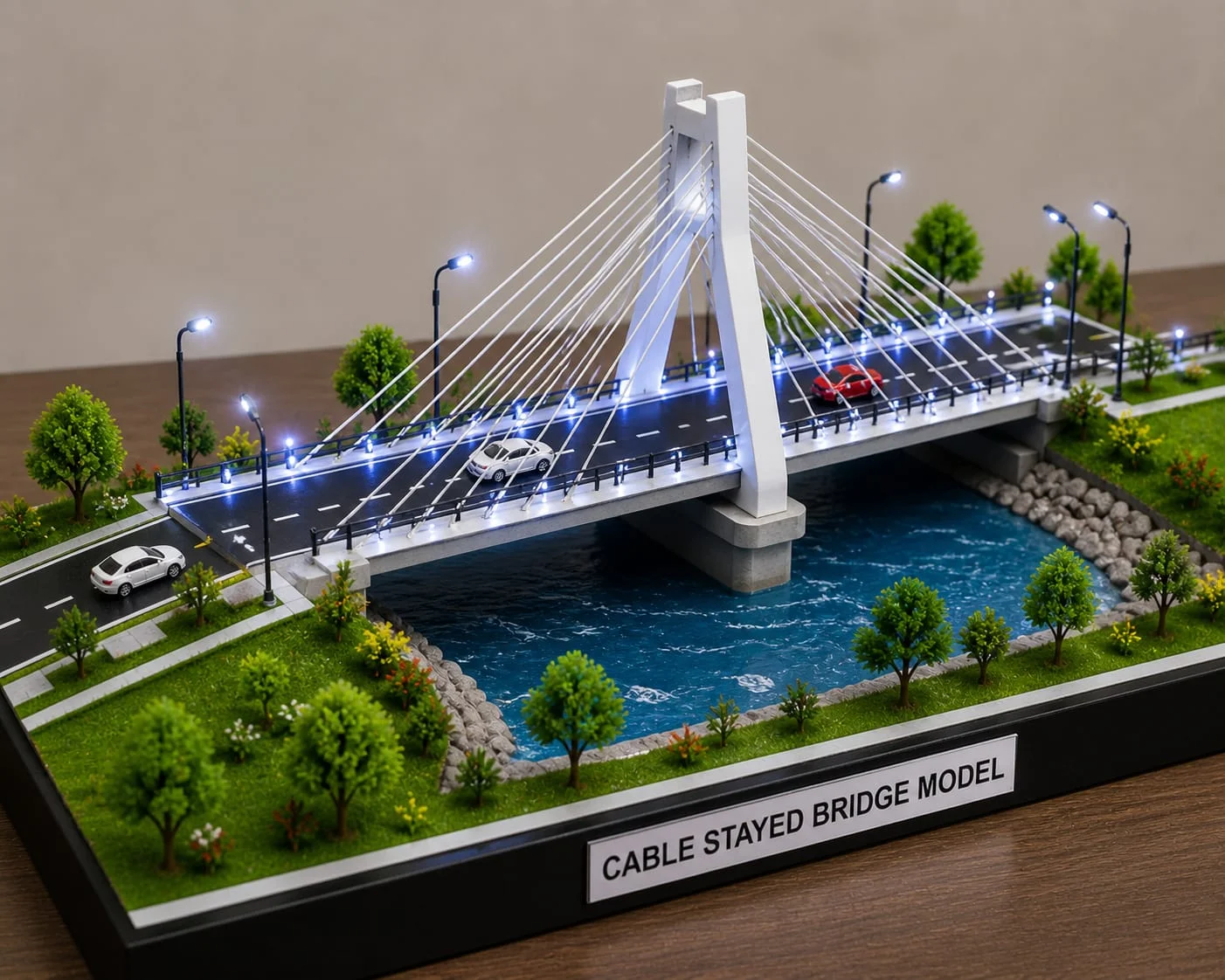
When a manufacturing company or an infrastructure firm has to explain a complicated mechanical system to investors, government officials, or site engineers, drawings and CAD renders can only carry the conversation so far. A physical object that people can walk around, touch, and view from every angle closes that gap almost instantly. That is exactly why so many companies across the country now look for a dependable engineering model maker india before they finalize approvals, client presentations, or exhibition stalls.
What an Engineering Model Actually Does for a Project
A scale model translates dense technical drawings into something a non-technical audience can understand in seconds. Instead of asking a client to interpret an isometric drawing, a model lets them see how a pump skid connects to a pipe rack, how a conveyor system moves material through a factory floor, or how a turbine housing fits inside a larger assembly. This visual clarity reduces the number of clarification meetings and speeds up the sign-off process considerably.
It also catches design conflicts early. Engineers who have spent weeks staring at a screen sometimes miss spatial clashes that become obvious the moment a physical layout is built at scale. Builders and fabrication teams frequently use these models on the shop floor as a quick visual reference during assembly.
Industries That Depend on Scale Engineering Models
Power plants, water treatment facilities, chemical processing units, automotive assembly lines, and defence establishments are among the heaviest users of physical engineering models in the country. Public sector undertakings often commission models for exhibitions, technical fairs, and government audits, while private manufacturers use them internally for training new staff on machine layouts.
Educational institutions and R&D labs also rely on these builds, particularly when a working or semi-working mechanism needs to be demonstrated to students, funding bodies, or patent examiners. In each of these cases, the model has to be dimensionally accurate, not just visually pleasing.
What to Look for Before You Hire
Not every fabrication workshop can handle intricate mechanical detailing. Before shortlisting an engineering model maker india, ask to see previous work involving similar machinery or plant layouts. Check whether the studio can read GA drawings, P&IDs, or 3D CAD files directly, since this reduces translation errors between your engineering team and the model builders.
It also helps to confirm the materials they typically work with — acrylic, resin, metal, and 3D-printed components each behave differently and suit different budgets and timelines. A studio that offers a mix of these techniques usually gives you more flexibility on cost without compromising accuracy.
Materials, Detailing, and Turnaround Time
Good engineering models combine several fabrication methods in a single build. Structural frames are often laser-cut or CNC-machined for precision, while smaller components such as valves, gauges, and fittings are 3D printed for fine detail. Paint finishes and labelling are added at the end to match real equipment colour codes, which matters a great deal when the model is used for operator training.
Turnaround time depends on scale and complexity, but a well-organised workshop will give you a realistic schedule upfront rather than an optimistic one that slips closer to the deadline. Ask for a project timeline broken into design approval, fabrication, and finishing stages so you can plan your presentation date around it with confidence.
Why Local Expertise Matters
Working with a studio based in the country has practical advantages beyond cost. Shipping large or fragile models internationally is expensive and risky, and last-minute revisions become nearly impossible once a model has left the workshop. An experienced local specialist will already be familiar with local exhibition formats, government presentation standards, and the kind of finishing that Indian industrial clients expect.
There is also the matter of communication. Sitting down with the model-making team, reviewing a physical prototype, or requesting a quick on-site correction is far simpler when the studio is a phone call or a short drive away rather than a different time zone entirely.
Getting the Most Out of Your Investment
A well-built engineering model rarely gets used once. Many companies reuse the same model across multiple trade shows, client meetings, and internal reviews for years, which makes the upfront cost easier to justify. Before commissioning one, it helps to think about where else the model might travel — a smaller, more portable version might serve you better than an oversized showpiece that never leaves the head office.
Budgeting for the build should also account for transport and storage between events. A model that survives one exhibition but arrives at the next one with chipped paint or loose components ends up costing more in repairs than a slightly sturdier initial build would have.
Common Mistakes Companies Make When Commissioning a Model
One frequent mistake is approaching a studio too late in the project timeline, leaving no room for revisions once an initial draft is reviewed internally. Building in a proper feedback loop — a preliminary sketch, a scaled prototype of one section, and then full fabrication — catches misunderstandings early, when they are still cheap and quick to fix.
Another common issue is underestimating how much technical documentation the model-making team actually needs. Handing over an incomplete drawing set often forces the studio to make assumptions, which can lead to a model that looks right but does not match the true engineering intent. Sharing complete GA drawings, equipment lists, and any relevant photographs upfront avoids this entirely.
Companies sometimes also skip discussing the end use of the model in enough detail. A build intended purely for a single exhibition stand has very different durability requirements than one meant to sit permanently in a corporate lobby for years, and being clear about this from the outset helps the studio recommend the right materials and construction approach.
Questions Worth Asking Before You Sign Off
Before finalising a contract, it is worth asking a prospective studio how they handle unexpected design changes mid-build, since engineering projects rarely stay perfectly static throughout a multi-week fabrication process. Ask how many revision rounds are included in the quoted price and what additional changes typically cost beyond that.
It is also reasonable to ask for references from past industrial clients, particularly ones in your own sector, since a studio experienced with automotive assembly lines may approach a project quite differently from one used to building process plant equipment.
Choosing the Right Partner for the Build
In the end, choosing the right engineering model maker india comes down to matching your project’s technical complexity with a studio’s demonstrated fabrication skill. A model built with genuine engineering understanding, rather than just craft skill, will hold up under scrutiny from the engineers, regulators, and investors who eventually stand in front of it.
Taking the time to review portfolios, ask detailed process questions, and set clear expectations around timeline and revisions pays off well beyond the first presentation, since a good model tends to stay in active use for years after the initial commission.